Contractor payment schedules: why phased payments beat paying upfront
How a phased contractor payment schedule works, what a reasonable deposit covers, and the warning signs in a payment plan that front-loads the money.
A fair contractor payment schedule ties each payment to a phase of work that is finished and visible. You pay a deposit to get on the schedule and cover early materials, then make further payments as phases are completed, with the last payment due when the job is done and the punch list is closed. Paying most or all of the price before work begins removes your leverage and is one of the most common red flags in home improvement. In Saratoga County and across New York, a phased schedule is a standard way to keep the money and the work moving together.
How a phased payment schedule works
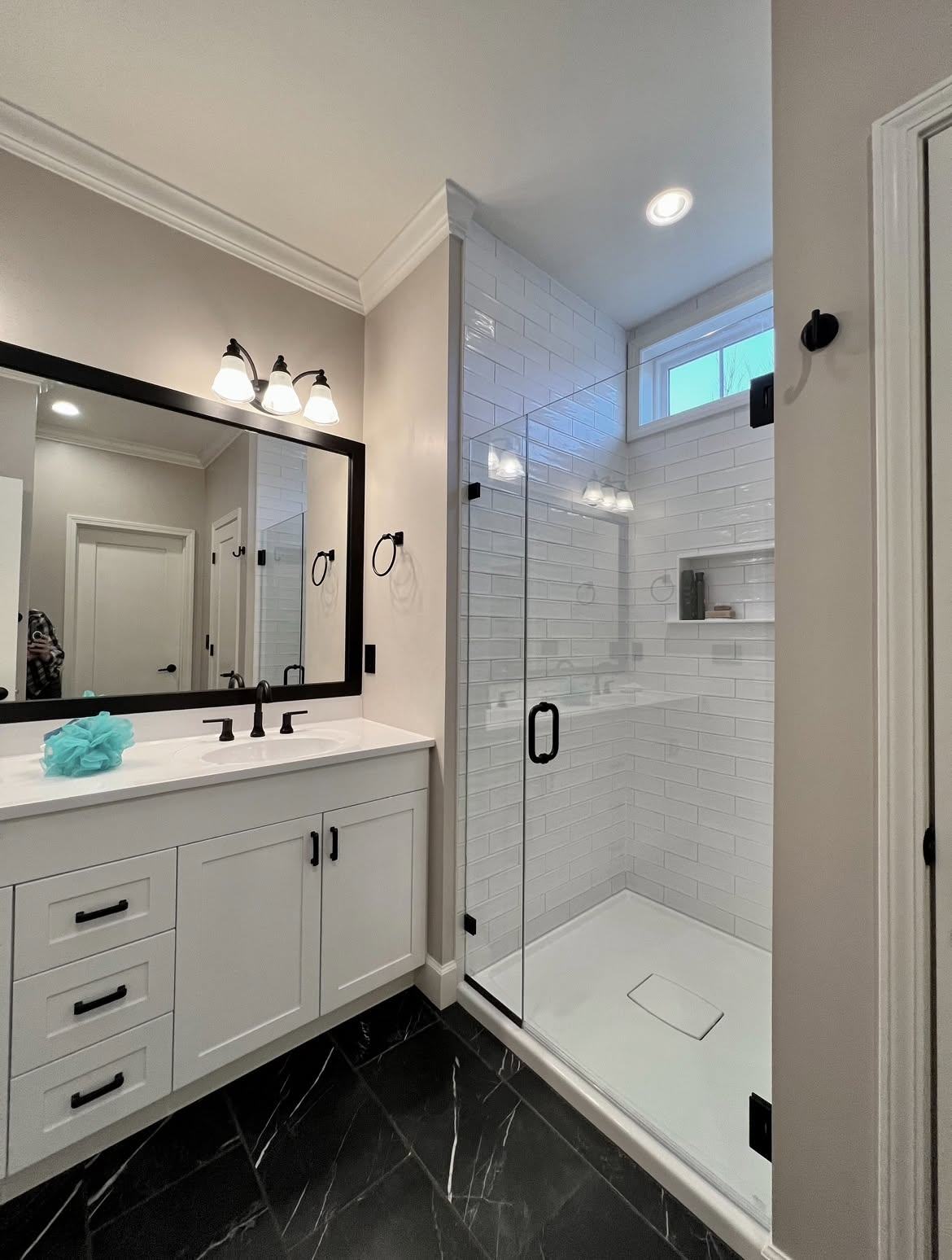
A phased schedule follows the scope of work. Each phase has a clear finish point that you can see and check, and a payment tied to it. For a bathroom remodel, a schedule might be organized like this:
| Phase | What is finished | Payment due |
|---|---|---|
| Scheduling | Contract signed, start date set, materials ordered | Deposit |
| Demolition and rough-in | Old bathroom removed, plumbing and electrical rough work done and inspected | Second payment |
| Walls and waterproofing | Backer board, waterproofing, drywall complete | Third payment |
| Tile and fixtures | Tile set, vanity, toilet and fixtures installed | Fourth payment |
| Completion | Punch list finished, final walkthrough | Final payment |
The number of payments varies with the size of the job. A small project might have two or three. A kitchen or addition might have five or six. What matters is that each payment matches work that has actually been done.
What a deposit should cover
A deposit is reasonable. It secures a place on the schedule and pays for items that must be ordered before work starts, such as custom cabinets, special-order tile or windows that take weeks to arrive. A contractor who pays for those up front and then has a client back out is left holding materials that may not fit any other house.
A deposit should be proportionate to those early costs, not a large share of the whole project. If a contractor asks for a large deposit, ask what it covers. A clear answer, such as "the cabinets are custom and must be paid for when ordered," is a good sign. A vague answer is not.
New York's consumer protection law includes rules about home improvement contracts and how deposits are handled. The details are a legal question, so read your contract closely and ask the contractor to explain the deposit terms in plain words. For more on what the contract and estimate should spell out, see what a remodeling estimate should include.
Why paying upfront is risky
When most of the money is paid before work begins, several things can go wrong:
- Leverage disappears. If the work stalls or the quality slips, you have little to hold back.
- The job may not start. Upfront payment is a common feature of home improvement fraud, where a "contractor" collects money and disappears.
- Money may go to another job. A contractor juggling cash flow can use one client's payment to finish someone else's project.
- Disputes get harder. Without a payment tied to a finished phase, there is no natural checkpoint to raise concerns.
A contractor who is confident in the work has no reason to ask for the whole price up front.
Why phased payments help the contractor too
A phased schedule is not only a protection for the homeowner. It gives the contractor steady payment as work is completed, so materials and labor are covered without carrying the whole cost until the end. It also creates regular moments for both sides to walk the job, confirm the phase is done, and talk about what comes next. Projects with clear checkpoints tend to have fewer surprises.
Payments and changes
Changes during a project should not be handled by vague additions to the next payment. When scope, price or schedule changes, the change should be written up and agreed before the work proceeds, with its own price and timing. That way, each payment still matches a known amount of work. Our post on change orders explains how this works.
Before the final payment
The last payment is your most important checkpoint. Before you make it:
- Walk the finished work with the contractor and write a punch list of anything incomplete or not right.
- Confirm that required inspections are passed and the permit is closed out.
- Collect warranty information and manuals for any fixtures or appliances.
- Make sure any agreed change orders are reflected in the final total.
It is reasonable to hold the final payment until the punch list is complete. It is not reasonable to withhold it over items that were never in the scope; the written scope is what settles that.
Payment methods
Pay by check or another traceable method, and keep records of every payment against the phase it covers. Be cautious with any request for cash only, payment to a personal name that is different from the business on the contract, or pressure to pay before a phase is finished. Before work begins, it is also wise to ask for certificates of insurance; see contractor insurance: what to ask in NY.
Frequently asked questions
How much should a contractor deposit be?
There is no single right number. A deposit should cover the cost of scheduling the job and ordering materials that must be bought before work starts. Ask what the deposit pays for, and be cautious if it is a large share of the total price on a project with no special-order materials.
Is it normal for a contractor to ask for payment before starting?
A deposit before starting is normal. Paying most or all of the price before any work is done is not, and it is a common sign of trouble.
What if the work falls behind the payment schedule?
Payments should follow completed phases, not dates on a calendar. If a phase is not finished, the payment tied to it is not due yet. A schedule built this way keeps the money and the work aligned even if the project runs longer than expected; our post on how long a bathroom remodel takes explains what tends to stretch timelines.
For bathrooms and every other project we take on in Saratoga County, our written scope of work is organized by phase, with the price and a payment schedule tied to each phase, so you always know what each payment covers before you make it.