Signs your shower is leaking behind the tile
How to read the clues that water is getting behind shower tile, how to narrow down whether it is the walls, pan, drain or plumbing, and what a lasting repair involves.
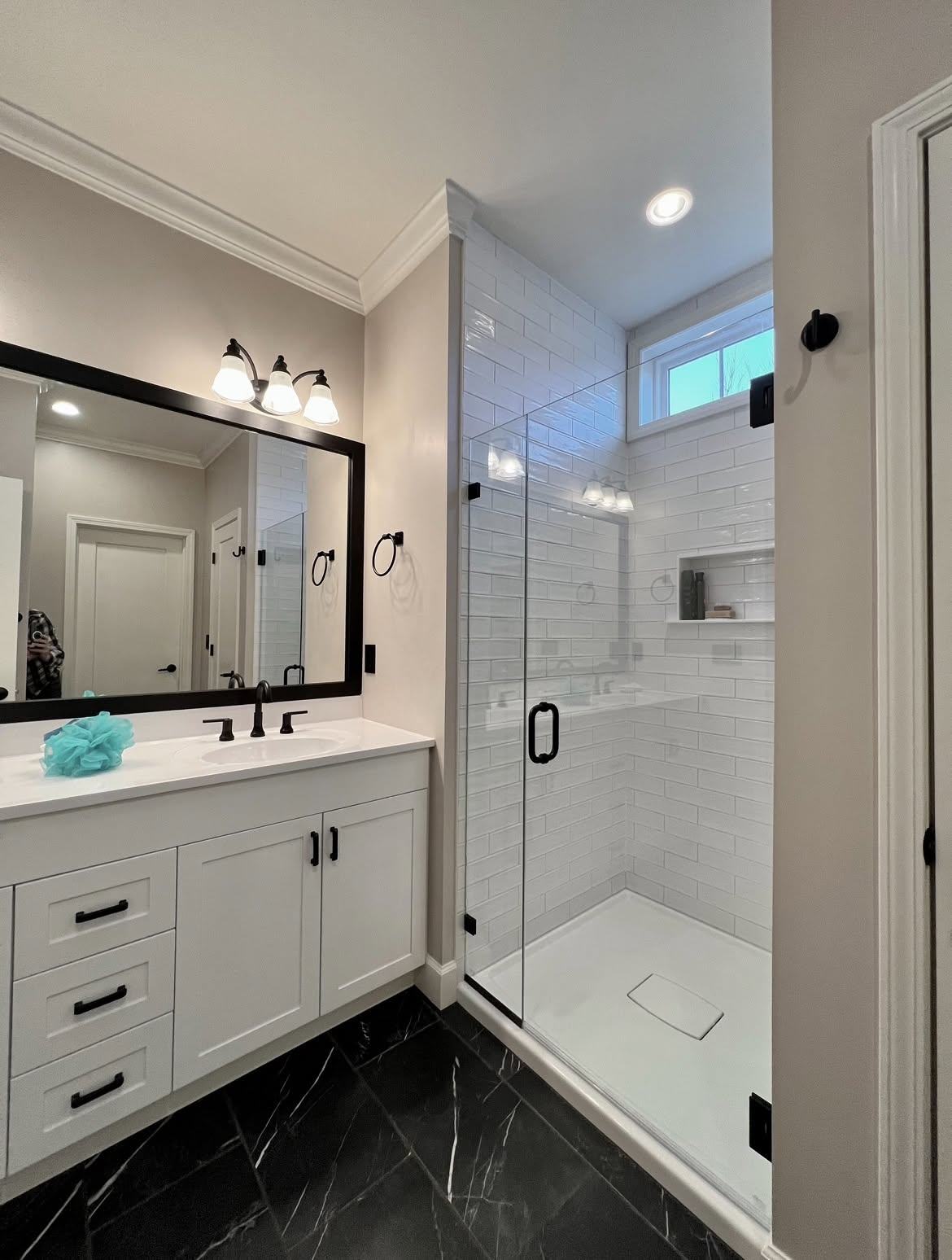
A shower that's leaking behind the tile gives itself away in a handful of places. Tiles sound hollow or move when you press them. Grout stays dark long after the last shower. The wall feels soft, the paint or trim just outside the shower peels and swells, the room smells musty, or a stain shows up on the ceiling below. One of those on its own can have a simple cause. Two or more together and water has probably been getting into the wall or floor for a while, and the sooner you find where it's coming in, the less framing and subfloor you'll be replacing.
Tile isn't the waterproof part
Tile doesn't keep water out, and neither does grout. Grout is porous, and a little water goes through it every time the shower runs. A shower built right has a waterproof layer behind the tile to catch that: a membrane over cement board, or a similar system, and on the floor a pan that's sloped and waterproofed so the water heads to the drain.
Plenty of older showers were tiled straight onto drywall or the green "moisture-resistant" board with nothing real behind it. They hold up for years. Then a grout line cracks or the caulk lets go. In Saratoga County we find this in old village houses with a bath redone at some point, and just as often in subdivision houses whose original showers are now a few decades old.
What to look for in the shower
Take the handle of a screwdriver and tap the tiles, gently, one at a time. A sound tile gives a solid click. A dull, hollow knock, or a tile that shifts under your thumb, means the bond behind it has failed, and the usual reason is wet backing.
Then look at the grout. Cracks, crumbling joints and missing pieces give water a straight path to the wall. Check it again the morning after a shower, too. Sealed grout in decent shape dries within an hour or two. If it's still dark the next morning, it's holding water. Our post on how often to seal grout gets into how to tell worn sealer from something worse.
Caulk at the tub edge and in the inside corners is one of the most common leak paths we see. A gap you can slide a fingernail into is enough. See how often to recaulk a tub or shower for that job, which most people can do themselves.
Mold that keeps coming back in the same spot, no matter how often you scrub it, is another tell.
Outside the shower and below it
Walk around to the other side of the shower wall, or the wall next to it, and press on it. A soft or bulging patch, paint that's bubbling, wallpaper lifting, or a baseboard that's swelled up all point back at the shower. So do floor tiles cracking or lifting just outside the curb, or a floor there that gives a little when you step on it. So does a musty smell when the door's been shut a while.
Then go downstairs. Water stains, bubbling paint or drywall starting to sag on the ceiling under the bathroom are hard to argue with. From an unfinished basement, shine a flashlight on the framing for drips or stains.
Narrowing down where it's coming from
Each possible source gets a different repair, so rule things out before anyone opens a wall. Let the shower sit unused for a day or two first so it dries out and any new stain is easy to see.
- Check for dampness or stains when the shower hasn't been used. If they're there anyway, the supply lines or valve inside the wall may be leaking. That's a licensed plumber's job. Shut off the water to that fixture if you can and call promptly.
- Pour water straight into the drain without wetting the walls or floor, then check below. Drain connections loosen over time.
- Test the pan or tub. On a tiled floor, a plumber or contractor can plug the drain and fill the pan with a shallow depth of water for a set time, then see whether the level drops or a stain appears below. On a tub, check the overflow and drain gaskets.
- With the drain ruled out, spray only the walls for several minutes, one section at a time, and look for fresh dampness after each.
- Watch the floor outside the shower while someone's using it. Water getting past a door or curtain and running along the floor can look just like a leak.
If it turns out to be the plumbing, a failed pan, or a wall that's soft to the touch, you're past what caulk and grout can fix.
When to call someone
Don't wait on it if the wall or floor is soft or tiles are falling off. Same if water is reaching the ceiling below, because there are often light fixtures there. Turn off the power to those lights and call an electrician if water is anywhere near the wiring. A leak in the supply plumbing inside the wall needs a plumber.
Mold is the other one. EPA guidance suggests professional help for mold covering more than about 10 square feet, and anyone with asthma or allergies shouldn't disturb mold themselves.
Older houses add a step before demolition. Pre-1978 houses can have lead paint on the walls and trim around the bathroom, and some older flooring, adhesives and pipe insulation contain asbestos. Get them tested before anything comes apart.
Fixing it so it stays fixed
Once water has been getting behind the tile for a long time, patching doesn't hold. We take the tile and the wet backing off, let the framing dry out, replace any studs or subfloor that have rotted, and rebuild the shower with a real waterproofing system before new tile goes on. With the wall open, it's also the time to fix a floor that doesn't slope to the drain, add a niche or bench, or swap an old valve.
Nobody knows the full scope until the wall is open. If what we find changes the price or the schedule, we write it up as a change order and agree on it with you before the work keeps going. For how the weeks lay out, see how long a bathroom remodel takes.
Frequently asked questions
Can I fix a leaking shower by regrouting?
Sometimes, if you've caught it early and the backing behind the tile is still dry and solid. If tiles are loose, the wall is soft or stains show up below, the water has already done its damage behind the tile. New grout will just cover it up.
How do I know if the shower pan is leaking?
Look for stains on the ceiling below that show up after showers, a soft floor around the shower, or grout on the shower floor that never dries. A flood test confirms it. The drain gets plugged and the pan is filled with shallow water for a period of time to see if it holds.
Is a leaking shower an emergency?
A supply line leak that runs all the time, or water near electrical fixtures, needs attention right away. A slow leak through grout or caulk isn't an emergency. It does get worse with every shower and leads to rot and mold, so deal with it within weeks, not months.
Tearing out a shower that's been leaking into the wall and building it back properly is regular bathroom work for us across Saratoga County, and the waterproof layer goes on before any new tile does. Some finished showers are on our bathrooms page.