Staircase restoration: when to repair and when to replace
The common problems in old staircases, which ones can be repaired with the original parts kept, when replacement makes more sense, and the code and paint questions to settle.
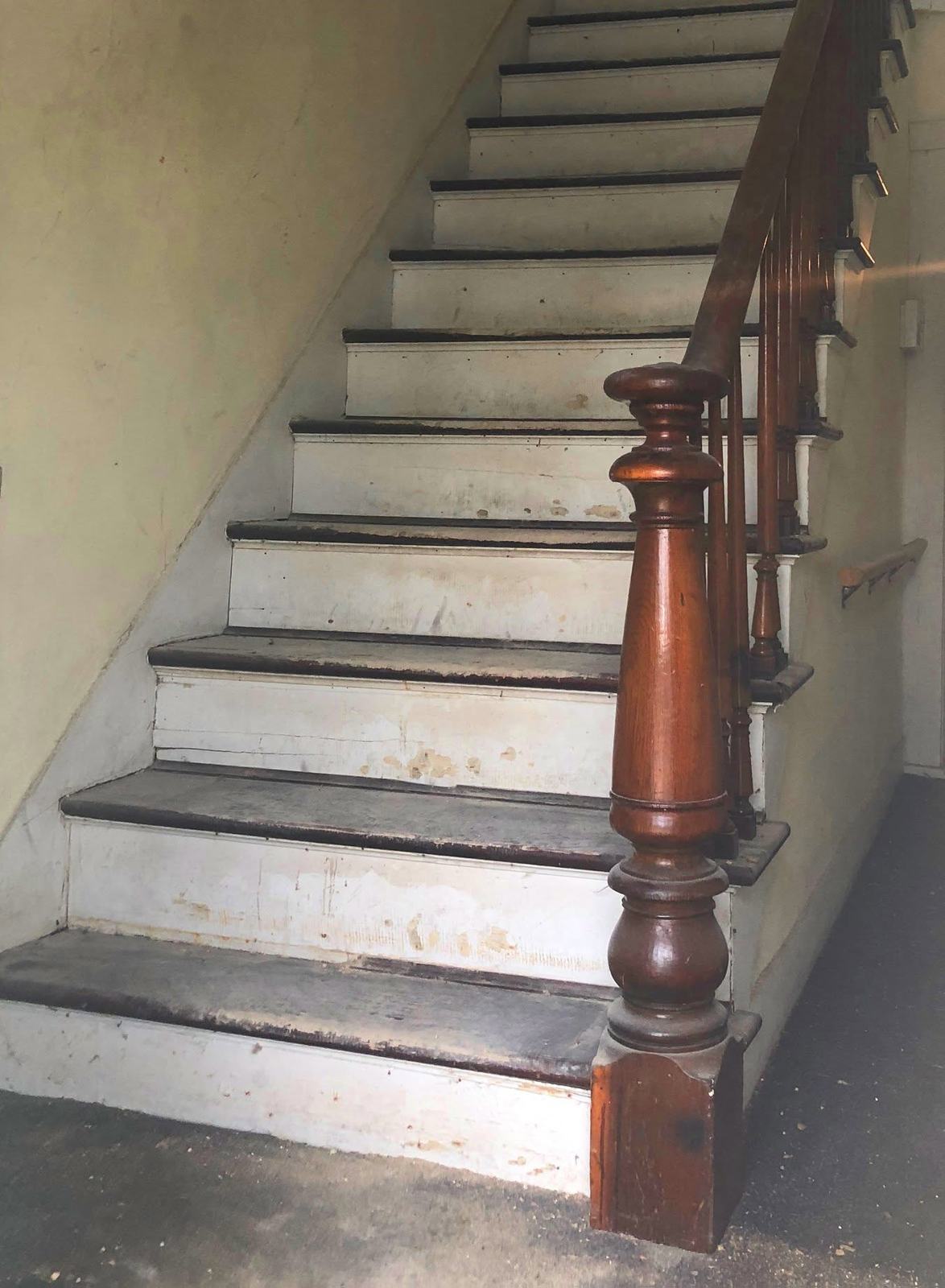
Most old staircases can be restored rather than replaced. Squeaky treads, loose balusters, a wobbly newel post and a worn finish are all repairable, and keeping the original parts preserves the craftsmanship that gives an older home its character. Replacement makes sense when the structure underneath has failed, when the stair is unsafe in ways repair cannot fix, or when a layout change is part of a larger remodel.
What makes old staircases worth saving
In many older Saratoga Springs homes, the main staircase was the showpiece of the house. Turned newel posts, shaped handrails, carved brackets on the open side of the stair and hardwood treads were made by hand or on equipment that is rare today. Matching that work new is possible, but it takes time and skill, and the result is a copy. Repairing the original keeps the real thing.
Old staircases were also built from dense, old-growth lumber that has had more than a century to stabilize. A stringer or tread that has stayed straight that long is often more stable than new material.
Common problems and how they are repaired
Squeaks and creaks
Squeaks come from wood rubbing on wood or on a loose nail as a tread or riser moves under weight. Common causes are shrunken wedges under the treads, loose glue blocks, or treads that have separated slightly from the risers. When the underside of the stair is accessible from a basement or closet, repairs can often be made from below by regluing and adding blocks or new wedges, with no visible change from above. When the underside is closed in, repairs are made from the top with careful fastening that is concealed afterward.
Loose balusters
Balusters loosen where they meet the handrail or the tread, usually because glue has failed or the wood has shrunk. Most can be reglued and refastened. A missing or broken baluster can be copied by a turner from a surviving example, so the new piece matches the rest.
A wobbly newel post
The newel post anchors the handrail at the bottom of the stair, and a loose one makes the whole rail feel unsafe. Newels are often fastened through the floor framing, and over time those connections loosen. Tightening or reinforcing the connection from below is the usual fix. We restored one staircase while keeping its original turned newel, which is often possible even when the post has loosened badly.
Worn treads
Treads wear in the center from decades of foot traffic. Shallow wear can be sanded and refinished. Deep wear, cracks or splits may call for replacing individual treads with matching wood and nosing profile. Replacing a few treads is far less disruptive than replacing the staircase.
Handrails and code
A sound handrail is the most important safety feature on any stair. Under the New York State Residential Code, stairs with four or more risers need a handrail, mounted 34 to 38 inches above the tread nosing. Many older staircases have a decorative rail on the open side and no rail on the wall side, or a rail at a height that does not meet today's standard. Adding a wall-mounted handrail is often the simplest way to make an old stair safer without changing its appearance. Our post on when stairs need a handrail explains the rules in more detail.
Paint, finishes and lead
Original staircases are often covered in several layers of paint or old varnish. Stripping them can reveal fine wood underneath, but in any house built before 1978 the finish should be tested for lead before any sanding, scraping or chemical stripping. Lead dust from stair work spreads through a house easily because stairs connect every floor. If lead is present, the work should follow lead-safe practices.
Sometimes the better choice is to repaint rather than strip, especially on balusters with fine turned detail. Painted balusters with a stained handrail and treads is a traditional combination in many period homes.
When replacement makes sense
Restoration is not always the right answer. Replacement is worth considering in these situations.
- The stringers are cracked, rotted or have pulled away from their supports.
- Water damage or insect damage has compromised the structure.
- Rise and run are so irregular that the stair is a tripping hazard, and that cannot be corrected with repair.
- A remodel changes the floor plan and the stair needs to move or turn.
- The stair is a later replacement with no historic value and poor construction.
Basement and cellar stairs fall into this category more often than main staircases. They are usually simpler, often damp, and sometimes built without much care. Our posts on basement stair repair and on replacing a worn bulkhead door cover the stairs at the bottom of the house.
When a staircase is replaced, the new stair generally has to meet current code for rise, run, headroom, width, handrails and guards. Check with your building department about permits and how code applies to your specific situation. Where the old stair has historic value, salvaging the newel, rail and balusters for reuse is sometimes possible even if the structure underneath is rebuilt.
How a staircase restoration usually goes
- Inspection from above and below. Look at treads, risers, stringers and the newel connection, and identify what is loose, worn or damaged.
- Paint testing on older homes before any finish work.
- Structural repairs first. Reglue, reinforce and refasten from below where possible.
- Replace failed parts with matching profiles.
- Handrail work to make the stair safe and code-appropriate.
- Finish work last, whether that means refinishing, repainting or both.
A staircase restoration often fits into a larger project. Our guide to restoring an old house in Saratoga Springs explains how stair work fits into overall repair priorities.
Frequently asked questions
Can a squeaky staircase be fixed without removing the treads?
Usually, yes. If the underside is accessible, squeaks can be fixed from below by regluing and adding blocks or wedges. If not, treads can be fastened from above with concealed fasteners, and the surface touched up afterward.
Is it worth restoring an original staircase?
In most older homes, yes. The original wood is often dense and stable, and hand-turned or carved details are difficult and time-consuming to duplicate. Restoring keeps the house's character and usually involves less disruption than full replacement.
Does a restored staircase need to meet current code?
Repairs to an existing stair generally do not require rebuilding it to current standards, but adding a handrail where one is missing makes it much safer. Replacing the stair or making major changes generally means meeting current code. Check with your building department about your specific project.
We restore and rebuild staircases, porches, trim and ceilings in older Capital Region homes, keeping original parts where they can be saved. See our restoration and built-ins work for examples of what we do.