How to inspect a deck ledger board
Where the deck meets the house is where serious failures start. A step-by-step look at the ledger, its flashing and fasteners, and the house framing behind it.
Inspecting a deck ledger board means checking the board that ties the deck to the house for water getting behind it, rot in the ledger or the house framing it's fastened to, and fasteners that are missing, rusted or the wrong kind. You can do a first look yourself in about twenty minutes, half from the yard and half from the basement. If you find a gap between the ledger and the house, soft wood, rust streaks, or nothing but nails holding it on, get the deck evaluated before the next heavy snow or the next graduation party.
Half the deck hangs on this board
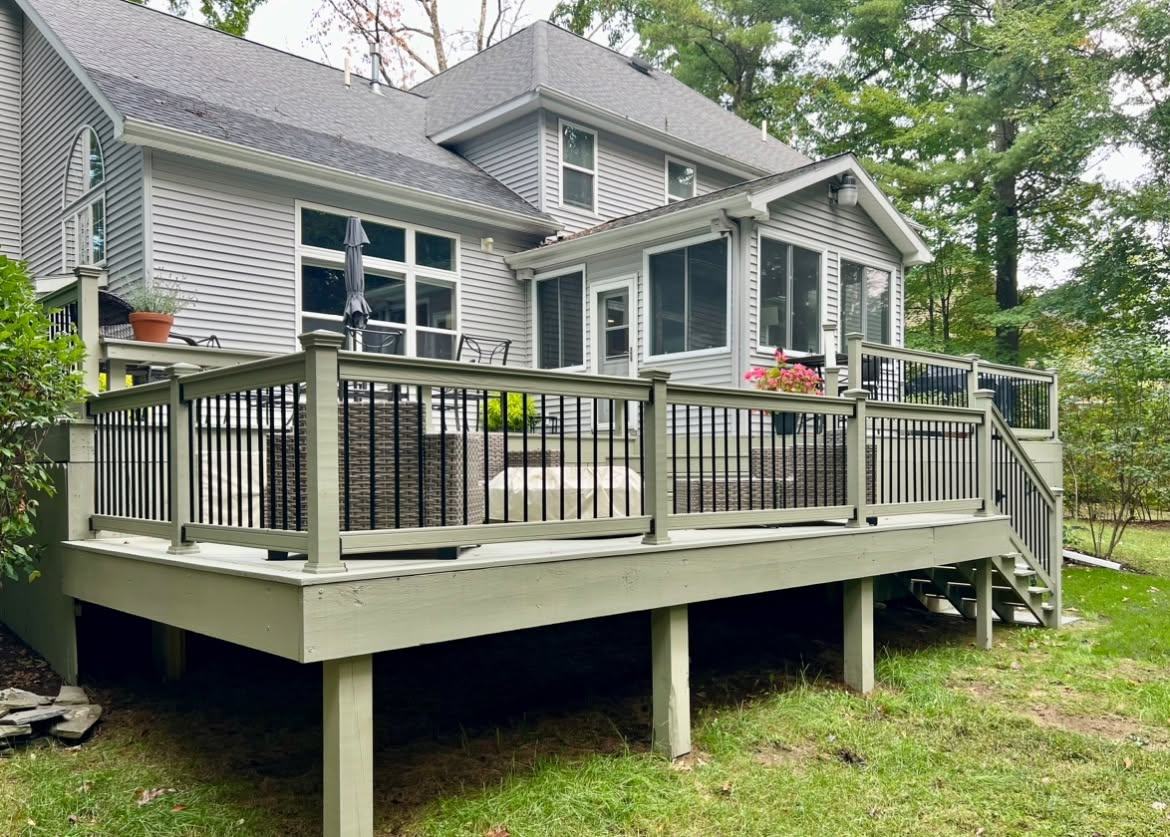
An attached deck is held up two ways. The outer side sits on posts and footings. The house side hangs on the house. The ledger is the board bolted to the house's rim joist, which is the framing that runs around the edge of the floor system, and the deck joists hang off the ledger, usually in metal hangers. Everything on that half of the deck, the snow, the table, the grill and the people, goes through the ledger's fasteners into the house.
Nearly every ledger failure comes back to water.
Missing or failed flashing is the big one. Rain and snowmelt run down the siding, get trapped between the ledger and the house, and rot both of them from the back where you can't see it.
Older decks were often nailed on, not bolted. Nails work loose over years of seasonal movement and can pull out under load.
Some ledgers were fastened right over the siding, or to brick veneer, stone veneer or a chimney. None of those is the house's structure, so the deck isn't really connected to anything.
And sometimes the ledger looks fine while the house's rim joist behind it has gone soft.
In Saratoga County, snow raises the stakes. A deck holding a couple of feet of wet, packed snow is carrying a serious load, and a ledger already eaten by rot has very little left to give.
The twenty-minute check
Bring a flashlight and a flat screwdriver, and walk the whole length of the ledger. This one's a real checklist, so here it is in order.
- Look for a gap. The ledger should sit tight to the house. Any gap you can see, or one that's wider than last year, is a warning.
- Find the flashing. There should be metal or membrane flashing tucked up behind the siding above the ledger and lapped over its top edge, so water runs over and off. Bare wood butting into siding with no flashing means water is probably getting in.
- Look for stains. Dark streaks on the foundation or siding below the ledger, or running down its face, show you where water has been traveling.
- Probe the wood. Push the screwdriver into the ledger, especially along the bottom edge and around every fastener. It should fight back.
- Look at the fasteners. You want bolts with washers, or structural screws, spaced along the ledger, usually staggered high and low. Rust streaks, heads corroded away, or a row of nail heads and nothing else all call for a professional look.
- Check the hangers. Each joist should sit in a metal hanger with a nail in every hole. Look for heavy rust, or joists that have dropped in their hangers.
Then go inside. If the deck attaches next to a basement or crawlspace, find the inside face of the rim joist right behind the ledger. Water stains, mold, soft wood or rusty bolt tips poking through tell you water's been getting in from outside. It's also where you can see whether the bolts really go all the way through the rim joist and have nuts on the inside.
When to keep everyone off
Some findings mean nobody uses the deck until a qualified contractor or engineer has looked at it:
- The ledger has pulled away from the house, even a little, or the gap is growing
- The ledger or rim joist is soft enough that the screwdriver sinks in easily
- The deck is held on with nails only
- The ledger is fastened to brick or stone veneer
- Joists have dropped or twisted in their hangers
- The deck sways side to side when people walk on it
Those are structural problems, and the fix involves the house framing as well as the deck. Don't try to fix it in a weekend.
How it's done now
Current practice under the New York State Residential Code, which follows the International Residential Code, is far more specific than it was a few decades ago. We pull the siding off where the ledger goes and fasten the ledger straight to the house's rim joist, with through-bolts or approved structural screws in a set pattern. Flashing goes in behind the siding and over the ledger to shed water. Many decks also get lateral load connectors that tie the deck joists to the house's floor framing, so the deck can't pull away sideways.
When you can't get a solid connection to the house, say over brick veneer or a floor that cantilevers past the foundation, the usual answer is a freestanding deck with its own beam and posts near the house. Repairing or replacing a ledger is structural work and typically needs a building permit, so check with your town or city building department. Our post on building permits in Saratoga Springs covers how to ask.
Look every spring
Ledger trouble builds slowly for years and then shows up all at once. A quick look each spring catches most of it early. Put it on the after-winter walk-around in our spring home inspection after winter, and on the longer list in our home maintenance schedule for upstate NY.
Overflowing gutters above a deck are a common cause of ledger rot. If water sheets onto the deck in a storm, read our guide to soffit and fascia repair too.
If the ledger is one problem among several, the deck may be near the end. Our list of signs your deck needs to be replaced can help you decide between fixing it and starting over.
Frequently asked questions
Can a deck ledger be replaced without rebuilding the whole deck?
Sometimes. If the joists, beams and footings are sound, the deck can be shored up temporarily while the ledger and flashing come off, the rim joist gets repaired, and a new ledger goes on. If rot has spread into the joist ends or the frame has other problems, a rebuild is often the smarter money.
How often should I inspect my deck ledger?
Take a quick look every spring and after any heavy-snow winter. A closer look every few years, or whenever you restain, makes sense too. Look sooner if the deck starts moving differently or new stains show up on the foundation.
Is it safe to shovel snow off my deck?
Taking heavy snow off lightens the load on the deck and on the ledger in particular. Use a plastic shovel and leave a thin layer instead of scraping down to the boards. If you already suspect a ledger problem, keep people and snow off it as much as you can until it's checked.
When the frame is sound, we'll replace a rotted ledger and its flashing and leave the rest of the deck alone. When it isn't, we rebuild. We do both across Saratoga County, and some of that work is on our decks, stairs and railings page.