Ice dam damage: what it does to a house and how to repair it
Why ice dams form, the damage they leave in ceilings, walls and eaves, what to do during a leak, and the repair order that keeps it from happening again.
Ice dam damage repair has two parts. The first is fixing what the water ruined, such as stained ceilings, wet insulation and rotted trim. The second is fixing the reason the ice dam formed, which is usually heat escaping into the attic. Repairing the ceiling without addressing the attic means the stain often comes back the next hard winter. In Saratoga County, where snow can sit on a roof for weeks and temperatures swing above and below freezing, ice dams are one of the most common sources of winter water damage.
How ice dams form
An ice dam is a ridge of ice along the lower edge of a roof. It forms when the upper part of the roof is warm enough to melt the snow on it while the eaves, which hang out past the heated part of the house, stay below freezing. Meltwater runs down under the snow, reaches the cold eave and freezes. Over days the ridge grows, and water backs up behind it. Shingles are designed to shed water running downhill, not to hold back standing water, so it works its way under them and into the house.
The heat that melts the snow usually comes from the living space. Gaps around attic hatches, recessed lights, plumbing vents and wall top plates let warm air into the attic. Thin or uneven insulation lets heat through the ceiling. Poor attic ventilation keeps that warmth trapped against the roof deck. Older homes, and houses with finished attic rooms or low-slope roof sections, are especially prone.
Long icicles hanging from the gutters are often the first visible sign, along with thick ice in the gutters themselves.
The damage ice dams leave
Water from an ice dam travels in ways that are not always obvious. Common damage includes:
- Ceiling stains on the top floor, usually near exterior walls
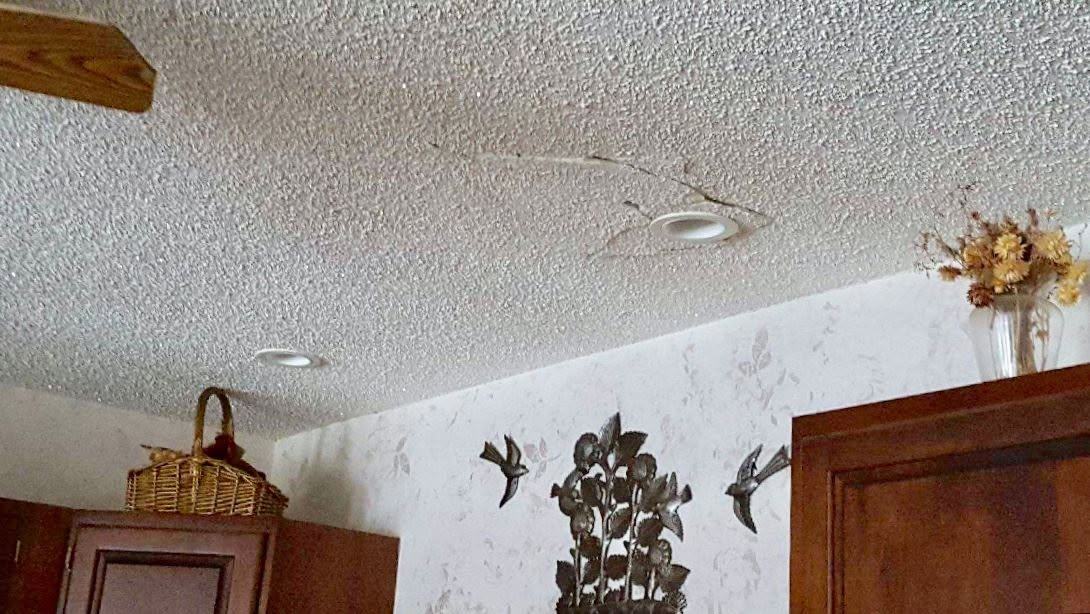
- Peeling paint, bubbling or cracking on ceilings and high on walls
- Cracked or sagging plaster, since old plaster loses its grip on the lath when soaked
- Wet, compressed insulation in the attic, which loses much of its insulating value
- Water running inside walls, showing up as stains around windows or baseboards
- Rotted roof sheathing, fascia and soffits at the eaves
- Torn or bent gutters from the weight of ice
Some of this is hidden. Water can soak insulation and framing for weeks before a stain appears, and wet materials in a closed cavity can grow mold.
What to do during an active leak
If water is coming through a ceiling during a thaw:
- Move furniture and belongings and catch drips with buckets and towels.
- If water is near a light fixture, outlet or ceiling fan, turn off that circuit at the panel and have an electrician check it before using it again.
- A bulging ceiling may be holding water. Keep people out from under it and call a professional; don't puncture a large bulge yourself.
- From the ground, use a roof rake to pull snow off the lower few feet of the roof. This reduces the meltwater feeding the dam.
- Don't climb onto an icy roof or chip at the ice with a hammer, axe or shovel. That tears shingles and causes falls. Professional roofers use low-pressure steam to cut channels in ice dams safely.
Take photos of the damage as it happens. They help with any insurance claim and with tracing the leak later.
Repairing the damage in the right order
1. Find the source
Look in the attic, if it is accessible, during or after the leak. Water stains on the underside of the roof sheathing, wet insulation and frost on nails all point to where heat and moisture are concentrated.
2. Fix the attic
This is the part that prevents a repeat. Typical work includes air sealing the gaps between the living space and attic, adding insulation to bring it to a consistent depth, and making sure soffit and ridge vents work together so cold outside air flows under the roof deck. Insulation and air sealing are often handled by an insulation contractor, and a home energy assessment can show where heat is escaping.
3. Repair the roof edge
Rotted sheathing, fascia and soffits at the eaves need to be replaced. When a roof is replaced, an ice barrier membrane is installed along the eaves under the shingles, which helps keep backed-up water out. The New York State Residential Code addresses ice barriers at the eaves; your building department can confirm what applies to your roof. Our post on soffit and fascia repair covers the trim side.
4. Dry, then repair the interior
Ceilings and walls must be fully dry before repair, or paint will peel and the stain will bleed through. Wet insulation in walls or ceilings usually needs to come out. Stains on otherwise sound drywall can often be sealed with a stain-blocking primer and painted. Sagging plaster may need to be re-attached or replaced. Any mold on framing, insulation or drywall should be evaluated and handled by a mold professional.
Older homes and damaged ceilings
Many older Saratoga County houses have plaster ceilings, and some have textured or popcorn finishes added later. Before disturbing a textured ceiling, have it tested for asbestos. Before sanding or scraping painted plaster in a home built before 1978, test for lead.
A cracked plaster ceiling does not always have to come down. Depending on its condition, it can be repaired, skimmed, or covered. One approach we have used on a badly cracked ceiling is tin-look tiles, which cover the damage while suiting an older house. Our guide to restoring an old house in Saratoga Springs covers how we weigh repair against replacement for original finishes.
Water that runs down the outside wall can also soak upper-floor window trim. If those sills are soft in spring, see our post on window sill rot repair.
Preventing the next one
- Keep gutters clear in late fall so meltwater can drain. Our fall home maintenance checklist puts this in the right season.
- Rake snow off the lower roof after heavy storms, from the ground.
- Seal and insulate the attic, the most effective long-term fix.
- Check after each winter for new stains, as part of a spring home inspection.
Heat cables along the eaves can help in problem spots, but they treat the symptom rather than the cause and need to be installed according to the manufacturer's instructions by a qualified person.
Frequently asked questions
Do gutters cause ice dams?
Not directly. Ice dams form because of heat loss through the roof, and they can occur on roofs without gutters. Clogged gutters can make things worse by holding ice at the edge, but cleaning gutters alone won't stop ice dams.
Can I paint over an ice dam stain on the ceiling?
Only once the ceiling and the materials above it are fully dry and the cause has been fixed. Use a stain-blocking primer first, or the stain will bleed through ordinary paint.
Is ice dam damage covered by homeowners insurance?
Coverage varies by policy. Many policies cover sudden water damage inside the house but may treat the cause differently. Call your insurer, and document the damage with photos before cleaning up.
We repair water-damaged ceilings, trim, soffits and fascia, and restore original finishes where possible, as part of our restoration and built-ins work. After a site visit, you receive a written scope of work by phase, and any change is agreed in writing before work proceeds.