Repairing historic homes in Schuylerville and Stillwater
The old houses along the Hudson in Schuylerville and Stillwater need careful repair. What usually fails, what is worth saving, and how to plan the work.
Historic home repair in Schuylerville and Stillwater is mostly about keeping water out and keeping original parts in. The villages along the Hudson and the old canal have many houses from the 1800s, and the most common problems are rotted porches and sills, worn exterior trim, loose stairs, and damp cellars with tired bulkhead doors. The right approach is usually to repair and match what is there rather than replace it with modern stock, and to deal with water first so the repairs last.
The houses along the river
Schuylerville and Stillwater sit in the Hudson valley on the eastern edge of Saratoga County, in an area known for the Battles of Saratoga and the Saratoga National Historical Park. Both villages grew along the river and the Champlain Canal, and their main streets and side streets still have many nineteenth-century houses: simple frame farmhouses, Greek Revival and Italianate village homes, and houses that have been added onto several times over the generations.
These houses share some traits that shape every repair:
- Old-growth lumber that is often denser and more rot-resistant than new framing lumber
- Rough-sawn or full-dimension framing that does not match modern sizes
- Stone or brick foundations and low, damp cellars
- Original millwork, stair parts and porch details that cannot be bought off the shelf
- Layers of paint, with lead paint likely in the lower layers
Water is the first job
Almost every failure we see on an old village house traces back to water. Before planning any cosmetic work, walk the outside of the house after a heavy rain or during a thaw and look for:
- Gutters that overflow or downspouts that empty against the foundation
- Paint peeling in one area, which often points to moisture behind it
- Soft wood at the bottoms of porch posts, door thresholds and window sills
- Damp walls, efflorescence (white mineral deposits) or standing water in the cellar
- Soil or pavement sloping toward the house instead of away from it
Fixing the source of the water usually costs less than any of the repairs it causes, and it keeps new work from failing the same way the old work did. Our post on how often to paint exterior trim explains how paint condition can show you where water is getting in.
Porches, trim and windows
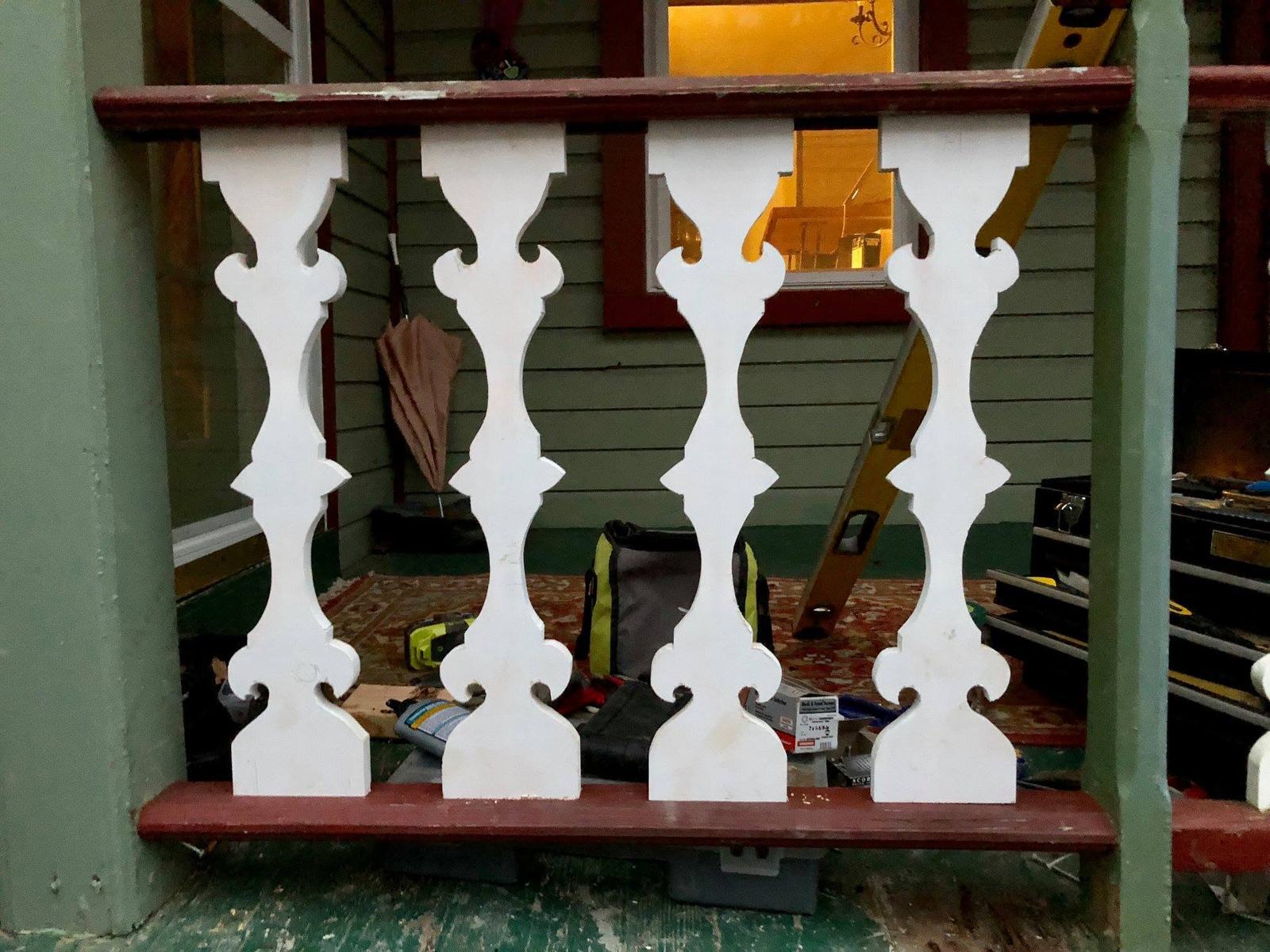
Front porches take the worst of the weather. Floor boards rot at the outer edge, posts rot where they meet the deck, and decorative balusters split and loosen. The good news is that most porch parts can be reproduced. Scroll-cut balusters, turned posts and brackets can be copied from a surviving original, and a rotted section of a porch floor can be replaced without rebuilding the whole porch, provided the framing underneath is sound.
Exterior trim and window sills follow the same logic. A soft sill or the bottom of a casing can often be cut out and replaced with a fitted piece of new wood, then primed and painted to match. Replacing an entire original window or door frame should be the last option, not the first.
Stairs and interiors
Inside, the staircase is often the most valuable original feature. Loose balusters, a wobbly newel and squeaky treads are common, and nearly all of it is repairable. Turned newels and balusters can be reglued, re-pinned and reinforced from below, and missing parts can be copied. Our guide to staircase restoration, repair or replace goes through how to decide.
A stair still has to be safe. The New York State Residential Code calls for a handrail on stairs with four or more risers, at a height of 34 to 38 inches. On a historic stair, a compliant rail can usually be added in a way that suits the original, for example on the wall side of a stair that only has a balustrade on the open side.
Plaster walls and ceilings crack as old houses move. Many cracks can be stabilized and patched. A badly cracked ceiling can also be covered, for example with tin-look tiles, which suit nineteenth-century rooms well.
Cellars, bulkheads and cellar stairs
Many village houses have a cellar reached through an exterior bulkhead door and a steep set of stairs. Steel bulkheads rust through at the bottom and along the hinges; the concrete or stone around them cracks; and the cellar stair below is often uneven, narrow and soft at the bottom where moisture sits. Replacing a worn bulkhead and rebuilding the cellar stair makes the cellar safer and drier to use. Our posts on bulkhead door replacement signs and basement stair repair cover what to look for.
Lead, asbestos and safe practices
Old houses almost certainly have lead paint somewhere, and some have asbestos in pipe insulation, older flooring or ceiling materials. Test before sanding, scraping or demolishing. Work that disturbs lead paint in a pre-1978 home should be done with lead-safe practices by people trained to do it, and materials that test positive for asbestos should be handled by a licensed abatement contractor. This protects your family and anyone working in the house.
Permits and local review
Structural repairs, porch rebuilds and new plumbing or electrical work usually need a building permit. Schuylerville is a village within the town of Saratoga, and Stillwater has both a village and a town, so the first step is confirming which office handles permits for your address. Ask as well whether any local historic review applies to exterior changes. Requirements vary, so confirm them with the village or town before the work is scheduled.
Frequently asked questions
Should I replace old wood windows in a historic house?
Not automatically. Many original wood windows can be repaired, reglazed and weatherstripped, and paired with storm windows they can perform reasonably well. Replacement makes sense when the frames are badly rotted, but it is worth getting a repair assessment first.
Can a rotted porch be repaired without losing its original look?
Usually. Posts, balusters, brackets and floor boards can be reproduced from surviving originals, and only the damaged pieces need to be replaced. The key is checking the framing and footings first, because new trim on a failing structure will not last.
What is the most important repair on an old house?
Keeping water out. Gutters, downspouts, grading, roof flashing and paint are less exciting than a kitchen, but water damage causes most of the rot, settling and interior damage we see in older homes.
Schuylerville and Stillwater are part of the area we cover across the Capital Region. Our restoration and built-ins work includes repairing old stairs, porches, trim and ceilings, and replacing worn bulkheads and cellar stairs, with a written scope of work by phase before anything starts.